

Inspiration, Innovation, and AI: The first International BILAI PhD Summer School
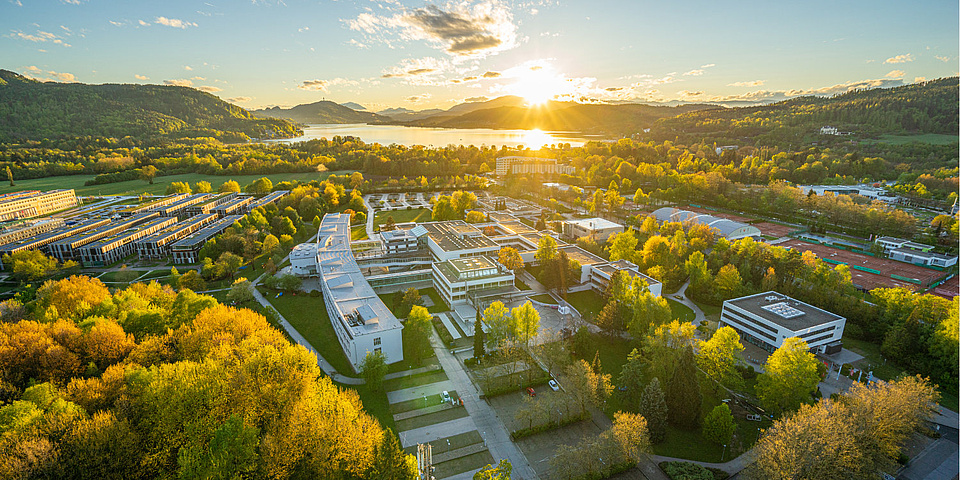
From July 7–11, 2025, the first BilAI PhD Summer School took place at the University of Klagenfurt — an inspiring and intellectually rich week dedicated to advancing research, fostering collaboration, and building an international AI community.
This first edition of the BilAI summer school brought together 41 PhD students to explore advanced topics in bilateral artificial intelligence, which strives for combining symbolic AI (logic, reasoning) with subsymbolic AI (neural networks, machine learning), with a particular focus on neurosymbolic AI. The intensive five-day programme featured 24 hours of lectures and hands-on sessions, designed to provide a comprehensive introduction to both symbolic and subsymbolic approaches in AI.
Participants engaged in research projects for practical workshops that bridged large language models and symbolic reasoning tools:
- Robert Peharz / Emanuel Sallinger Geometric Knowledge Graph Embeddings meet Probabilistic Circuits
- Erich Kobler / Max Heisinger LLM ∧ Booleguru |= SAT
- Martin Gebser / Konstantin Schekotihin Logic Puzzle Solving with Natural Language Processing and Automated Reasoning
- Johannes Fürnkranz / Timo Bertram Constrained-Based Neural Learning of Sudoku
- Axel Polleres / Johannes Schimunek Scaling Symbolic Reasoning, LLMs and graph learning to real world Knowledge Graphs
Further highlights from the academic programme included:
- Introductory lectures on knowledge graphs, RDF, SPARQL, SHACL, and their relevance to current AI developments, including LLMs.
- Sessions on deep learning, graph-based neuro-symbolic AI, and formal reasoning.
- Lectures from distinguished researchers such as Katja Hose, Johannes Fürnkranz , Emanuel Sallinger, Erich Kobler and
- Keynotes from Martina Seidl, Yufang Hou and Nikolaus Forgó as part of the co-located AIRoV Symposium.
Beyond the classroom, the Summer School placed strong emphasis on community-building and networking.
From a specially designed escape game through Klagenfurt’s city centre to a social boat trip on Lake Wörthersee, participants had the chance to connect informally, exchange ideas, and build lasting relationships across institutions.
One of the most appreciated aspects of the week was the opportunity to connect with peers, share research challenges, and begin forming a national network of early-career AI researchers — a crucial step in strengthening the Austrian AI landscape.
The Summer School was organized by the Training Unit of the Bilateral AI Project supported by the Austrian Science Fund (FWF).
The initiative brings together leading researchers from six top Austrian universities and institutions, and was held in cooperation with AIRoV – the Austrian Symposium on AI, Robotics, and Vision.
This week would not have been possible without the tremendous effort of all contributors — from lecturers and keynote speakers to the organizers and volunteers who dedicated their time and energy to making the event a success: Thomas Eiter, Gerhard Friedrich, Johannes Fürnkranz, Marta Sabou, Thomas Pock, Axel Polleres, Martina Seidl, Emanuel Sallinger, Martin Gebserm, Timo Bertram, Katja Hose, Robert Peharz, Erich Kobler, Maximilian Heisinger, Johannes Schimunek, Konstantin Schekotihin, Wolfgang Faber, Leyli Slavata, Petra Wiesner.
Success Stories from the first International BILAI PhD Summer School
From a simple question at Summer School 2025 to an ESWC 2026 paper
See how a week of collaboration sparked a full research journey and read the full story here.
From Summer School 2025 to an award-winning ICLR 2026 workshop paper
Check out both articles from our partners JKU Linz and TU Wien.
Impressions